.png)
DEC and EPA hold EJ listening session in downtown Rochester, but who’s speaking?
- Steve Daly

- Oct 28, 2024
- 5 min read
Earlier this month, the Environmental Protection Agency (EPA) and New York Department of Environmental Conservation (DEC) held an environmental justice listening session and agency resource fair in downtown Rochester. EPA and DEC intended for the event to give the agencies the opportunity to hear “directly from residents of Rochester and the West Central NY area.”[1]
Was the event a success?
On the one hand, the turnout for the event was strong, with standing room only during much of the listening session, which lasted about two and a half hours. About 50 members of the public spoke during the session.
Yet on the other hand, in speaking afterward with others, several attendees expressed disappointment about the listening session, including the limited number of issues addressed by the public, the lack of public representation from the City of Rochester itself, and certain barriers to active public participation and engagement.

The Format
In April 2024, DEC and EPA announced a series of environmental justice listening sessions that would be held statewide through 2024 and 2025. A stop in Rochester was third on the list.
The event was held on a weeknight evening, October 7, 2024, at SUNY Brockport’s downtown campus in Rochester. The “interactive” agency[2] resource fair in the lobby offered members of the public the opportunity to engage with EPA, DEC, Monroe County, and New York State Department of Health staff.
The listening session that followed included brief remarks from a representative of Monroe County, the EPA Region 2 Administrator, Lisa Garcia, and the DEC interim commissioner and podcast host,[3] Sean Mahar, after which members of the community were given an opportunity to speak. Speakers needed to register in advance and were allotted three minutes to speak, although the agencies were not strict about the time limit.
The Issues
Despite the number of speakers, the issues addressed by the speakers were primarily limited to a few areas of concern, summarized below.[4]
The Stamp Project, Genesee County
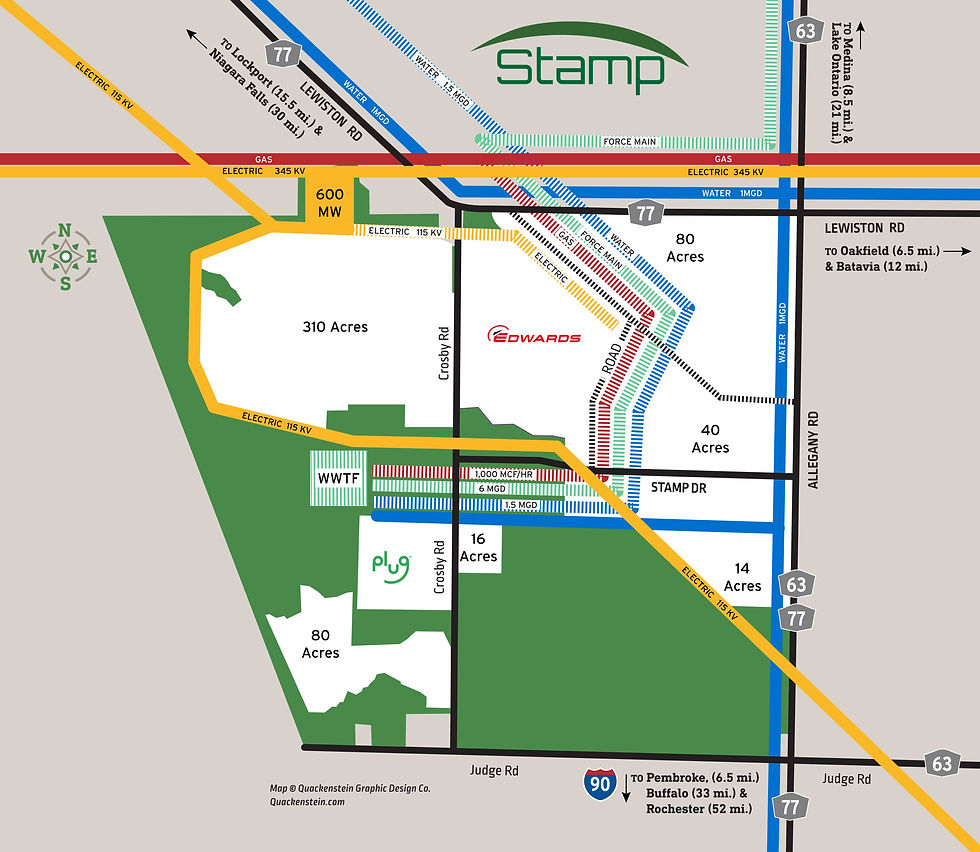
A majority of the speaking members of the public expressed opposition to the proposed development of the Science, Technology & Advanced Manufacturing Park (STAMP) in Genesee County. The Genesee County Economic Development Center has been working for more than a decade to develop the 1,250-acre site into a tech manufacturing megasite.
The STAMP project has been the ongoing target of legal challenges and community opposition, including especially from the Tonawanda Seneca Nation, whose reservation is located next to the STAMP site. The STAMP site is also located next to several wildlife management areas and refuges, including the Iroquois National Wildlife Refuge.
The listening session was attended by numerous members of the Tonawanda Seneca Nation and their allies, whose testimony in opposition to the Stamp Project was at times both moving and tragic.
Seneca Meadows Landfill, Seneca County
Numerous members of the public also expressed opposition to the proposed expansion and continued operation of the Seneca Meadows Landfill located in Seneca Falls, New York, the largest landfill in the State according to the New York Times.[5] The landfill was set to close beginning in 2025, but the operator of the landfill has requested from DEC a permit to expand and continue operating the landfill until 2040.
DEC plans to hold public hearings about the proposed permit application later this year. The application materials for the proposed expansion are available online on the operator’s website.[6]
Zoar Valley, Erie and Cattaraugus Counties

Several members of the public also expressed opposition to proposed logging in Zoar Valley, which is according to DEC “one of the most scenic and ecologically diverse environmental areas in Western New York.”[7]
DEC proposes to authorize logging within a 92-acre area of Zoar Valley as part of a forest management project to increase environmental diversity, in cooperation with the New York Audubon Society.
Some members of the public oppose the plan, however, because existing plants and animals in the region may be disrupted by the logging operation. They are also concerned about the trees designated for removal, which include mature black walnut and cherry trees.
What about the City of Rochester?
Despite the listening session being held in downtown Rochester, environmental issues affecting either the City or surrounding county received little mention from speakers at the event. City residents certainly have numerous concerns, including air quality, brownfields, safe drinking water, and lead exposure, just to list a few, but none of these were discussed. Neither was the water quality of Lake Ontario or the Genesee River.
One speaker, a Black resident of the City, lamented the apparent lack of attendance by City residents at the listening session, particularly Black residents.
Another speaker offered some commentary as to why the listening session was not better attended by City residents. The speaker noted that individuals attending the event needed to register in advance and provide their contact information to the agencies, which could chill public participation. The speaker also noted that the public was not provided with information about the format of the event in advance, such as how much time each person would have to speak.
Indeed, for anyone fearful of public speaking, which includes 75% of the general population according to some estimates, speaking at the event would have taken significant courage, which is perhaps not the best format for facilitating input from a broad swath of the general public. Setting aside time for attendees to provide written comments, or to speak in small group settings, may have expanded the issues presented to the agencies during the session.
Conclusion
Hopefully DEC and EPA continue to refine these listening sessions as they learn what works and what doesn’t. For now though, there are no plans on the schedule for the agencies to return to the Rochester region to hear more.
What issues would you have brought to the agencies’ attention if you had the opportunity to speak? Let me know in comments below or by emailing me at sdaly@citizenenvironmental.com.

[1] https://dec.ny.gov/news/press-releases/2024/9/us-epa-and-nys-dec-announce-oct-7-environmental-justice-listening-session-in-rochester
[2] The resource fair was not particularly “interactive” for this author. In speaking with DEC Region 8 staff in the Air Quality program during the resource fair, DEC staff declined to speak to me when I asked about the Department’s priorities as to issues in air quality, telling me that “they were going to tow the company line” and not speak to me because I am a lawyer. “Interactive” indeed!
[4] Other issues mentioned included replacing RG&E with a public utility, opposition to a major solar development in Rush Henrietta, and opposition to the proposed FairLife facility in Webster.


Comments